By Margaret Ellison · Updated June 2026 · 7 min read
Why Every "Cooling" Pillow You've Owned Went Warm in 20 Minutes — and the Simple Physics Fix Quietly Spreading Through Menopause Forums
It's not your hormones, it's not your fault, and it's not because nothing works. A look at the one design flaw shared by nearly every foam pillow on Amazon — and what women who fixed it say happened to their sleep.
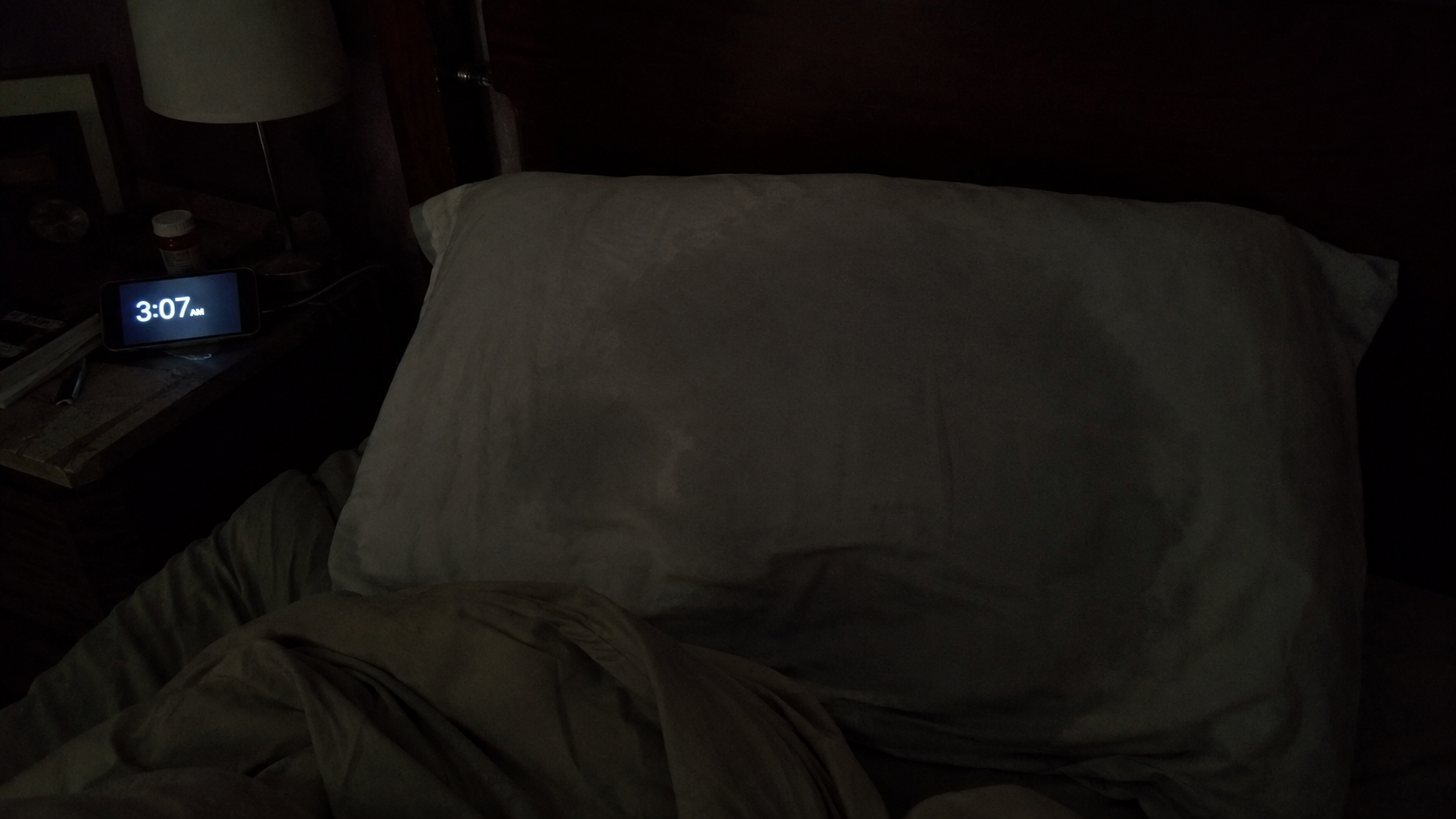
3am. The shirt change. The pillow flip. If you know, you know.
Margaret EllisonFounder — women taking care of women
If you're reading this, I'm going to guess three things about you.
You've woken up at 3am more times than you can count — soaked, freezing two minutes later, peeling off a wet shirt in the dark.
You've bought at least one "cooling" pillow. Probably two. It felt incredible in the store, or for the first twenty minutes that night. Then it didn't.
And at some point, you started to believe the quiet, defeated thing so many women in menopause forums eventually write: "I guess nothing actually works."
I want to show you why that conclusion — reasonable as it is — turns out to be wrong. Not wrong because some miracle product exists. Wrong because every pillow you tried failed for the same specific, physical, fixable reason. A reason that, once you see it, you can never unsee.
This isn't a hormone story. It's a heat story. And it starts with something your body has done every night of your life without you noticing.
The one thing your body must do to fall asleep
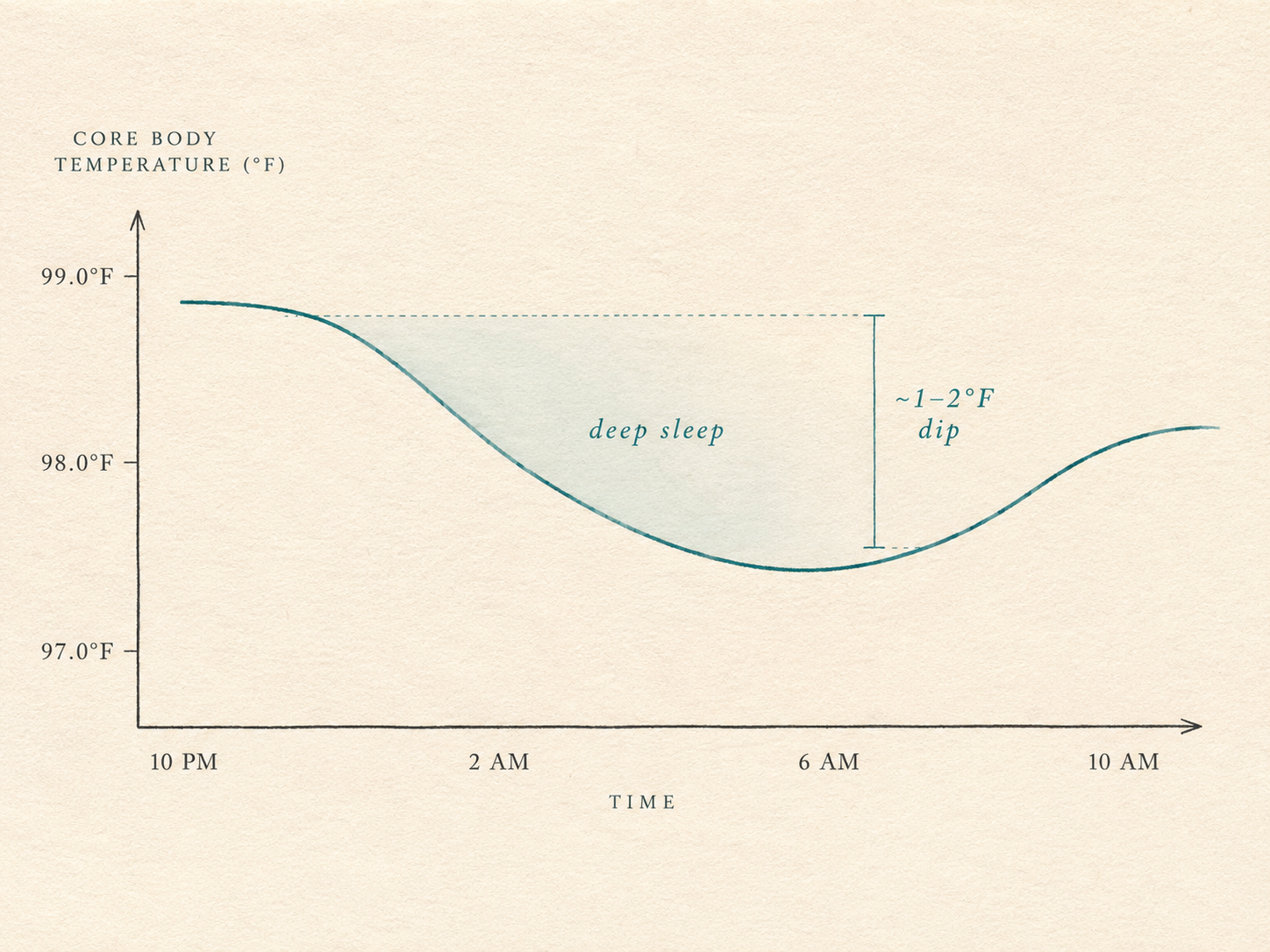
Sleep doesn't happen until the temperature drops. That's the trigger.
Here's the part of sleep science almost nobody told us.
Falling asleep isn't just about being tired. To drop into deep sleep, your core body temperature has to fall — roughly 1 to 2°F. That temperature drop isn't a side effect of sleep. It's the trigger. Your brain reads the falling temperature as the signal to let go.
No drop, no deep sleep. It's not willpower. It's physics.
For decades, your body handled this automatically. Around bedtime, blood flow shifts toward your skin, heat radiates out — much of it through your head, hands and feet — your core cools, and you slide under without ever thinking about it.
Then menopause changed one setting.
What a hot flash actually is (and isn't)
Menopause narrows what researchers call your thermoneutral zone — the temperature range your brain considers "fine." It used to be wide. Now it's a tightrope.
So the smallest rise in temperature — a warm duvet, a warm room, a warm pillow — trips the alarm. Your hypothalamus slams the "dump heat NOW" button: blood rushes to your skin, sweat pours, your heart races. That's the flash.
Here's the detail that changes everything: the flash itself lasts about 90 seconds to a few minutes. That's it.
So why are you awake until 4:30?
Because of what happens after the flash. Your body just dumped a huge load of heat — and a big share of it went out through your head, straight into the surface beneath it.
If that heat escapes, your temperature falls, the trigger fires, and you drift back off. Many women sleep through flashes entirely without knowing it — when the heat has somewhere to go.
If it doesn't escape, it pools. Against your head. Your core can't get the drop it needs. And you lie there — soaked, then shivering, then warm again — wide awake.
The flash is 90 seconds. The trapped heat is the rest of your night.
So why did every "cooling" pillow fail? The 20-minute problem.
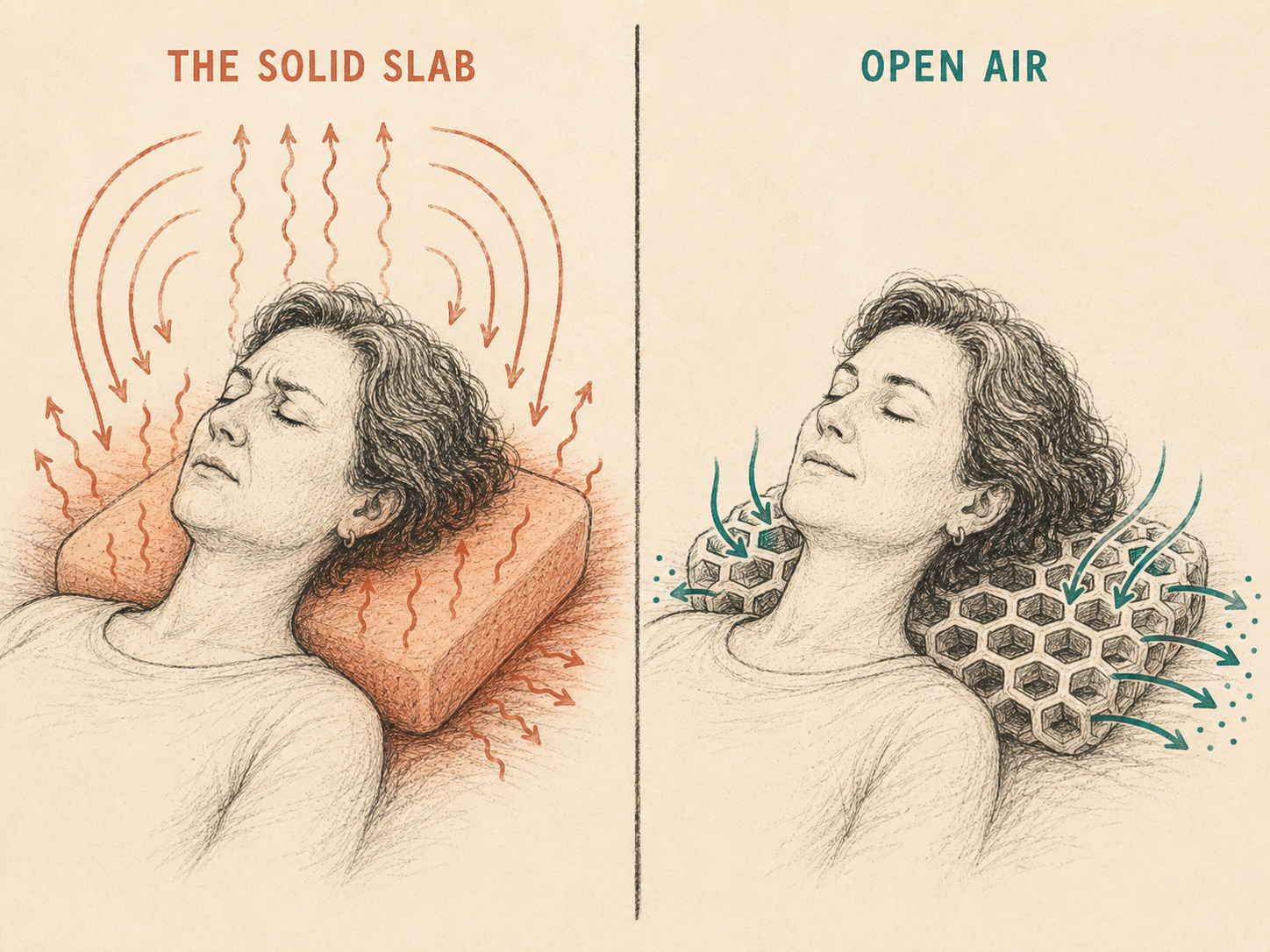
Every foam pillow you've owned is the left picture. You've never owned the right one.
Walk down any bedding aisle and you'll see the same promise: cooling gel. Cool-touch cover. "Sleeps cool."
Here's what foam actually does, mechanically. A foam pillow feels cool on first touch because it's absorbing your heat — pulling it out of your skin and storing it inside the solid material. That's the lovely first twenty minutes.
The problem is the word storing.
Solid foam has a limited capacity. After roughly twenty minutes under a warm head — much faster during a flash — it fills up with heat. And a full block of foam doesn't cool anything. It does the only thing physics allows: it radiates your own heat straight back into your head.
That's why the pillow that felt like relief at 11pm is, by 3am, the thing one Amazon reviewer famously called "the world's hottest pillow."
And it explains every behavior you've been quietly embarrassed about:
The pillow flip. You're not crazy, and you're not fussy. The cool side is real — it's the part of the slab that hasn't warmed through yet. You get about 90 seconds before that side fills too. You've been manually resetting a solid block of foam, multiple times a night, for years. Your instinct understood the product better than the label did.
The cooling sheets that gave you chills. Cotton and most "cooling" fabrics absorb your sweat, then hold the cold wetness against your skin. That's the soggy-then-freezing cycle.
The fan that never quite worked. It cools the room — not the sealed pocket of heat where your head meets the pillow. The one spot that matters is the one spot the airflow can't reach.
It was never cooling pillows that failed you. It was a solid block pretending it could let heat out.
Read that again, because it's the whole point of this article. You didn't buy wrong. You weren't gullible. The category sold you a heat storage device and called it a heat escape device. The failure was built in before you ever clicked "buy."
The fix isn't a colder pillow. It's a different shape entirely.
Once you see the solid-block problem, the solution almost states itself.
A pillow's job was never to stay cold. No solid material can — anything that absorbs heat eventually fills up. Chasing "colder" is how the category lied to you for a decade.
The actual job is to let heat move, not store it. And you can't do that with a solid block. You do it by getting rid of the solid part — building the pillow out of mostly open air, an open lattice, so the heat coming off your head passes straight through it and away instead of pooling against you.
When the surface under your head does that, something quietly important happens: your body's own cool-down system starts working again. The flash still comes — but the heat it dumps has an exit. Your core temperature gets its 1–2°F drop. The sleep trigger fires. And you go back under, often without fully waking.
You're not fighting your body anymore. You're finally getting out of its way.
The goal was never a cold pillow. It was this.
The pillow built around open air — by women who got burned first
For a long time, nothing on the market was actually built this way. The cheap end of the aisle was solid foam. The other end was $500–$2,600 water-cooled bed systems — effective, but with pumps, hoses, noise, and a price most of us can't justify for one side of one bed.
That gap is what DryNight was created to fill.
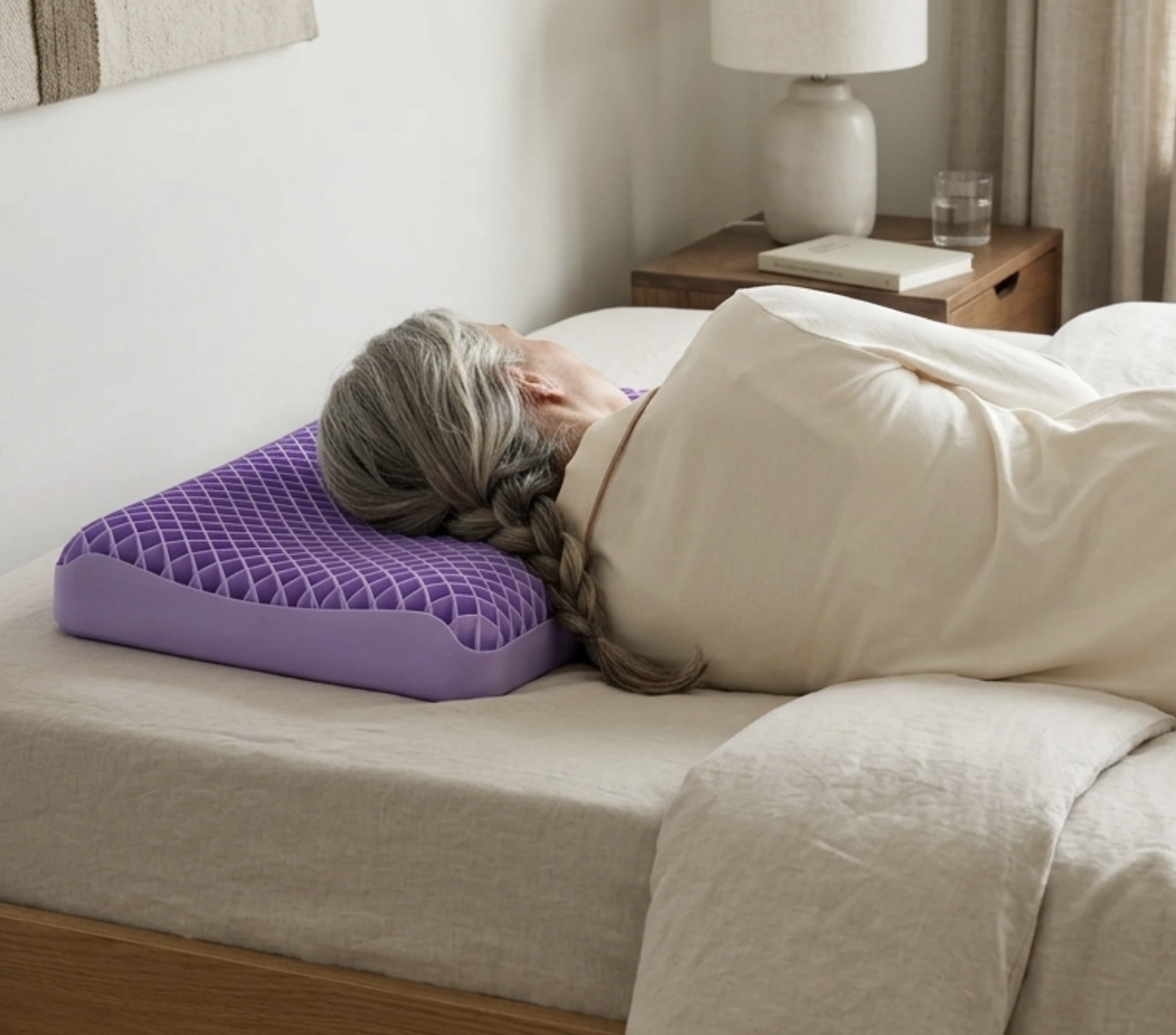
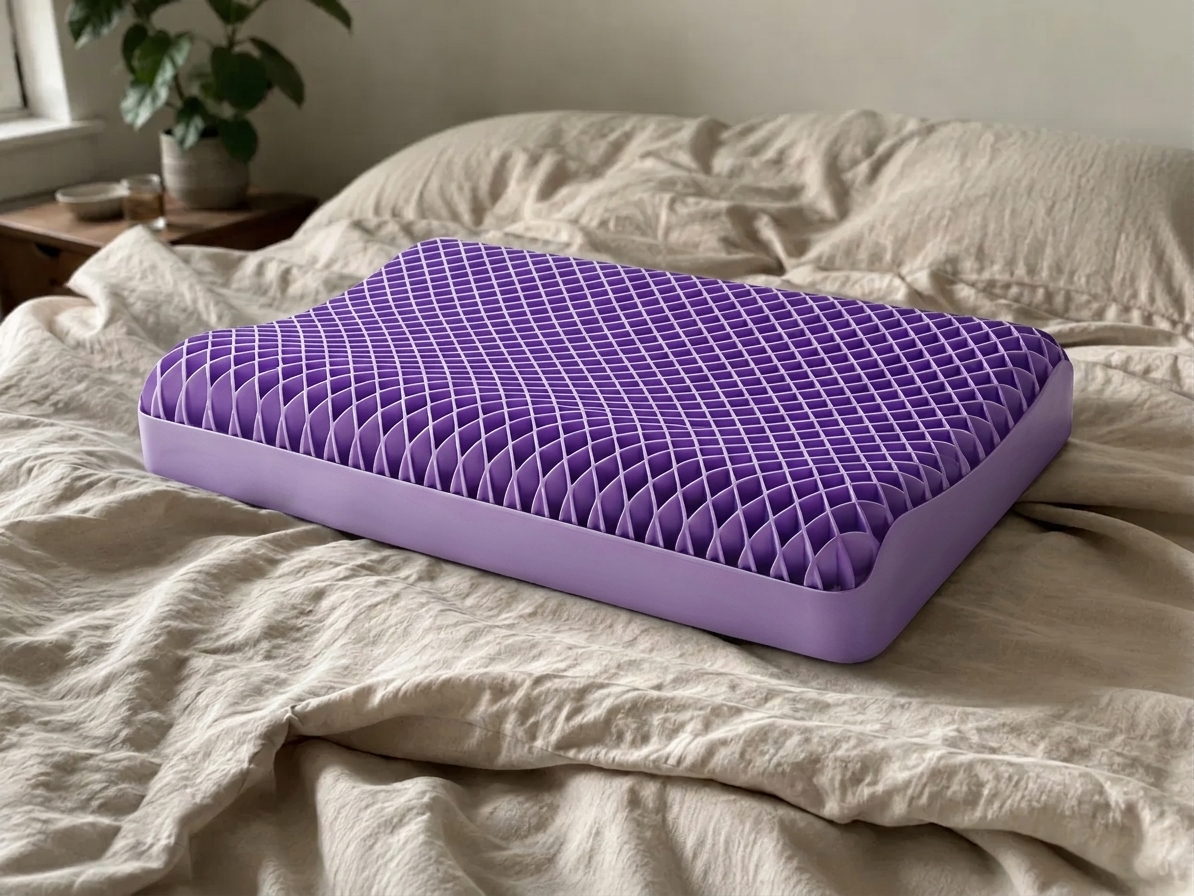
DryNight, built from an open grid instead of a solid block.
It was started by Margaret Ellison — not a materials scientist, not a sleep guru, just a woman who spent the better part of three years changing her sheets at 3am. She bought the "cooling" foam pillows, one after another. She lived the 20-minute lie, flipped them a hundred times a night chasing the cool side, and finally got stubborn enough to go down the rabbit hole of why every single one of them quit on her. The conclusion she reached is the one you just read: stop trying to build a pillow that stays cold. Build one that gets the heat off her.
So instead of a solid foam core that fills up, DryNight is built around an open elastic-gel grid — a honeycomb of mostly open air — under a thin, breathable, washable cover. Heat from your head passes into the channels and keeps moving instead of pooling, because there's no solid block to fill up.
It sleeps a little bouncier and more supportive than soft foam — most people love it after a night, some take two. It won't be ice-cold to the touch like a gel pad; that trick wears off in 20 minutes anyway. The cover is breathable and washable (for the nights that are still rough — there will be some), and it's deliberately priced in the middle: more than the $15 pillow that quits on you, far less than the $2,000 machine.
Now, the part you've been waiting for someone to admit
This pillow will not stop your hot flashes. Nothing you put on a bed can.
We're saying that in large type on our own page, because you have been over-promised to for years and we'd rather lose the sale than join that pile.
Your hot flashes come from your hormones. A pillow doesn't change that. Anyone who says otherwise is selling you the 2026 version of "stays cool all night."
What DryNight does is narrower, and — if you've lived this — bigger: it stops the flash from stealing the rest of your night. The flash comes. The heat has an exit. It passes. You go back to sleep. The 90-second event stays a 90-second event, instead of becoming a 3-hour one.
That's the whole claim. We think it's the only honest one in this category.
What women actually say (including the imperfect parts)
★★★★★
"First full night in over a year."
I didn't believe it, because I've returned three of these. I still get flashes — that hasn't changed. What's changed is I'm not awake for two hours after. I woke up at my alarm and my first thought was honestly confusion.
Donna R., 54 ✓ Verified buyer
★★★★★
"Not magic. But I stopped dreading my bed."
Took me a couple nights to get used to the feel — it's bouncier than a normal pillow. But on really bad nights I still wake once. Once is not five times, and I haven't done a 3am shirt change in three weeks.
Patricia M., 51 ✓ Verified buyer
★★★★★
"I'm back in our bedroom."
I'd been sleeping in the spare room out of embarrassment. I'm back in my own bed. My husband noticed before I said anything.
Sandra K., 57 ✓ Verified buyer
★★★★☆
"It just never gets hot."
Would have saved me probably $200 in pillows that ended up in the guest room closet. It's not cold to the touch like gel is at first — it just never gets hot. Which, it turns out, is the entire point.
Janet W., 49 ✓ Verified buyer
Notice what's not in those reviews: nobody says their menopause is cured, nobody says "miracle." That's on purpose — those are the only kind of reviews we publish, because they're the only kind that are true.
"I've been burned before." We built the guarantee for exactly that.
100-Night Trial·Free Returns·Full Refund
If you've read this far, you have a drawer or a closet shelf of products that promised this exact feeling and didn't deliver. We know, because that's who we built this for.
So here's the deal, stated plainly:
Sleep on it for 100 nights. Real nights — hot ones, bad ones, the works. If it ends up on the failed-pillow shelf, send it back and we refund you in full. Free returns, no interrogation, no "restocking fee" fine print.
The math from your side: the only thing you genuinely risk by trying it is nothing. The only thing you risk by not trying it is another month of 3am.
Somewhere in the last year or two, you probably stopped telling people how bad the nights are. The doctor said it's just menopause. The internet sold you foam. Your partner sleeps fine three feet away. So you got quiet about it and started flipping the pillow.
You were never the problem. The heat just needed somewhere to go.
Whatever you decide about the pillow — at least take the physics with you: your body has to shed heat to sleep, and a solid block under your head can only hoard it. Once you know that, you'll never look at a foam pillow the same way again.